Engine Architecture v4.2

The Physics of Pure Interaction.

At Metrino Gaming Apps, we don't just render images; we simulate environments. Our Aero Glass technology stack represents a paradigm shift in mobile performance, bridging the gap between desktop-grade fidelity and the power constraints of portable hardware.

Technical Inquiry
Latency Target 16.6ms
Draw Calls / Frame < 120
Memory Footprint 420MB

Kinetic State Engine

Traditional engines rely on frame-by-frame interpolation which often results in visual desync during network jitter. Our proprietary Kinetic State Engine uses a continuous-time simulation. Instead of "where will this project be in the next frame," it calculates "where should it be regardless of the framerate."

This allows for perfect visual continuity even if the hardware drops from 120Hz to 60Hz. Combined with our Network Prediction Layer, we can mask up to 150ms of latency by simulating projectile trails and player physics locally before the server confirmation arrives.
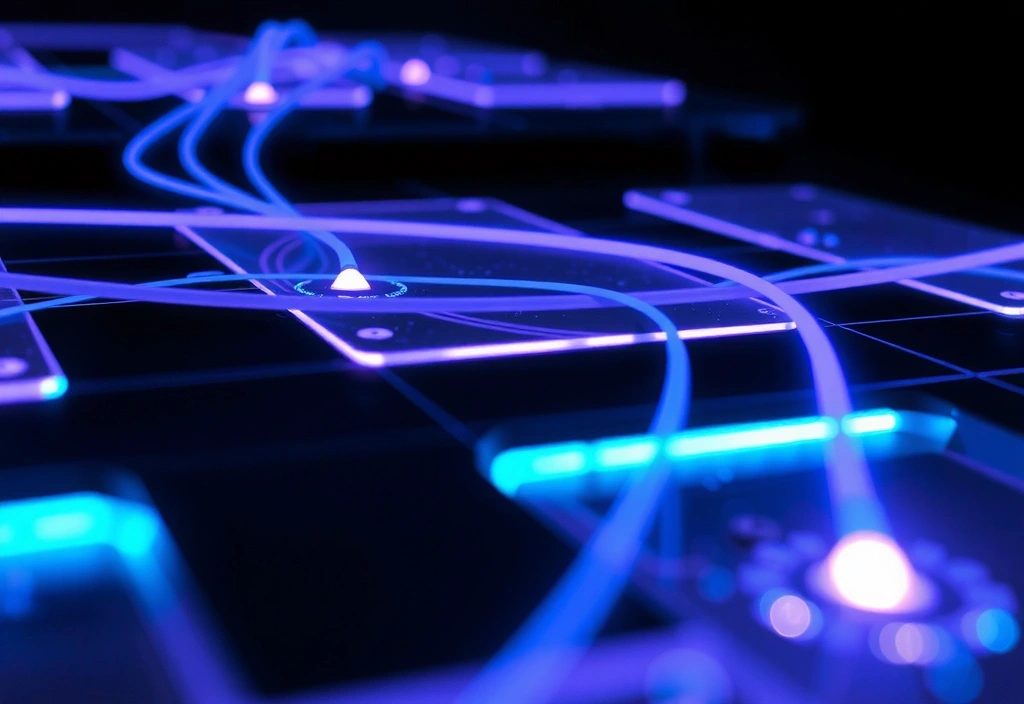
Particle flow visualization

AV-Pulse Integration

Every explosion, interface click, and environmental sound is mapped to a luminosity value. In Metrino applications, the glass UI literally refracts sound waves, creating a tactile sensory loop that improves player reaction speed.

Metadata sync_vibration(amp: 0.85, freq: 440hz)

Texture Foveation

Dynamically loading 4K assets only within focal fields reduces VRAM usage by 64%.

Shader Harmony

Custom node-based shaders ensure consistent "Sunrise" lighting across all device GPUs.

Multi-Body Physics

Handling 4,000+ active debris items at 60fps using custom WebAssembly logic.

Kernel Parity

Single Rust-based core compiling natively to Metal, Vulkan, and WebAssembly DX.

Beyond "Retina" — Designing
for the Human Eye.

Modern gaming often prioritizes raw polygon count over visual harmony. At Metrino, we believe the future of mobile interfaces lies in the Aero Glass paradigm. By utilizing real-time ray-traced reflections on particle fields, our UI feels living. It doesn't sit on top of the game; it exists within the workspace.

Our "Dark Mode" isn't a simple color inversion. It is a systematic shader adjustment that reduces blue-light peaks while using high-contrast hairlines to maintain clarity in low-light environments. This ensures that a session at 2:00 AM is just as comfortable as one in the bright Italian sunlight.

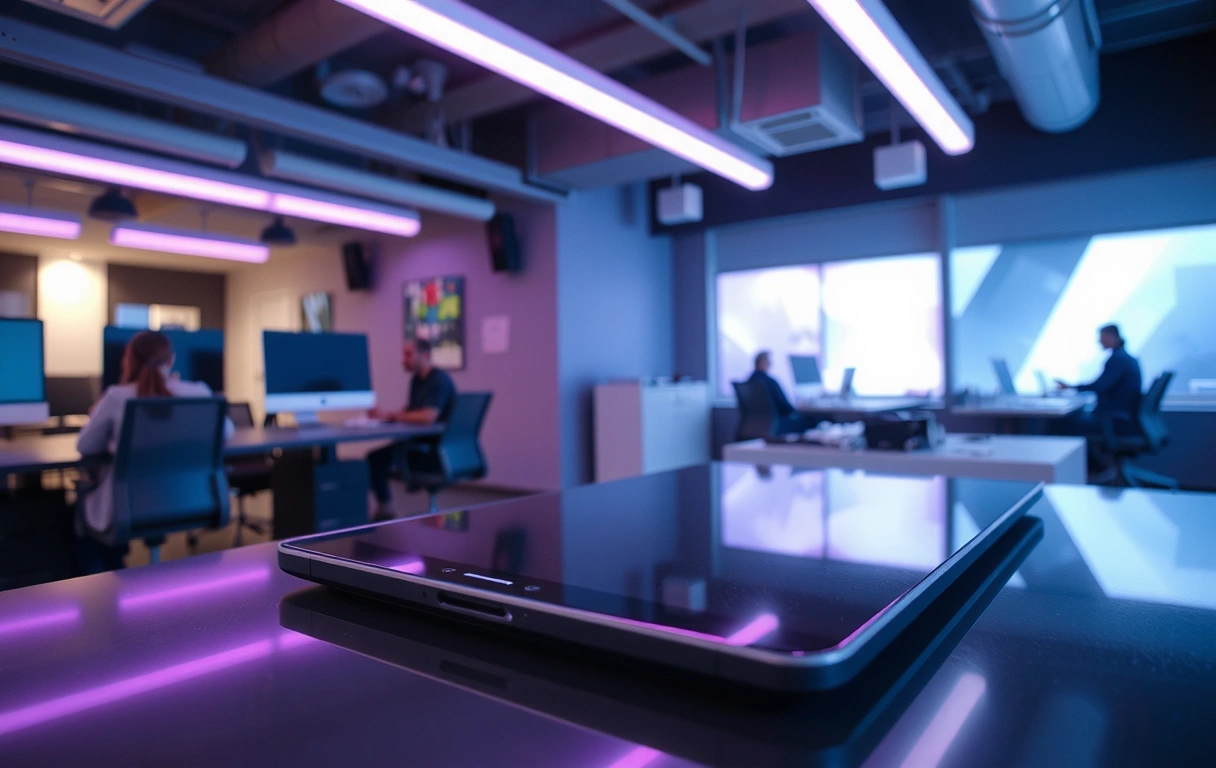
Aero Glass interface rendering performance
Fig 4.2: Real-time refraction and sub-surface scattering on mobile components.

Modern Logic Glossary

Procedural Motion
Not just pre-baked animations. It's reaction-based movement calculated in real-time. We sacrifice artist control for absolute responsive "snappiness."
Refractive Index (UI)
How much the background "bends" through our glass panels. Too much and it's noisy; too little and it looks like a 2012 gradient. We found the 1.45 sweet spot.
State Hydration
The process of restoring a game session in under 1.5 seconds after a phone call or notification interruption. Critical for mobile retention.
Vulkan/Metal Bridge
Avoid standard wrapper libraries. Low-level direct access is the only way to squeeze 120Hz out of mid-range Android hardware.

Optimization Checklist

  • Prioritize input response (Input Lag < 8ms).
  • Optimize for thermal throttling (reduce GPU intensity after 15 mins).
  • Strict memory management to prevent back-of-stack app termination.
  • Sacrifice framerate for ray-traced shadows (Never).
  • Use heavy third-party tracking SDKs that bloat start-up time (Never).

The Realism Anchor

"We tested our core engine on 3-year-old mid-range devices on the Rome metro during peak hours. The constraint wasn't the CPU; it was the variable 4G latency. We rewritten the Network Prediction layer specifically to handle these 200ms ping spikes without affecting visual fluidity."

Developer & Partner Resources

Deep dives for architects and curious minds.

Whitepaper
Aero Glass Rendering Pipeline

An exhaustive breakdown of how we achieve refractive transparency at 90fps.

Read Blueprint
Case Study
Battery vs. Fidelity Balance

Long-haul flight scenarios: optimizing for 6+ hours of play on a single charge.

View Study
Where to Start
Platform SDK v4.0

The latest build of our core framework including the physics sandbox tools.

Request Access

Universal Parity Support

Verified performance on current hardware standards.

Device Tier Framerate Target Technology Suite
Ultra (iPhone 15+/S24+) 120 FPS Full Ray-Tracing / 4K Textures
Standard (Modern Mid-range) 60-90 FPS Aero Glass / Particle Dynamics
Legacy (3-4 years old) 30-60 FPS Optimized Shader / Static Refraction
Last updated: January 2026 • Build 98.44.1

Ready to witness the engine in action?

Browse Applications